
The accounts payable is a process, which in the majority of companies, is eminently manual and consumes an elevated number of resources, it is estimated that an AP employee process an average of only 10,000 invoices per year.
As well as the problem of productivity and the inherent problems of manual tasks, there is another series of collateral effects, such as inconsistencies in the payment period, high variability in processing times, arbitrariness in the decision process, reactions in incident resolutions, accumulation of work, difficulty in managing peaks…
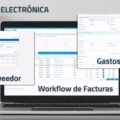
To improve the accounts payable process there are many tools, among them are the workflow tools.
Workflow tool in Accounts Payable
What is a workflow tool?
“A Workflow tool automates the sequence of actions, activities or tasks used to carry out a process, including tracking the state in each one of its stages, the people responsible, and the participants in each one of them.”
Automating the invoicing process using workflow tools requires preliminary activities. The most important of these is redefining the process, since simply automating tasks that are performed manually, without making the necessary adjustments, will not necessarily lead to improvement.
Throughout the invoicing process there are areas of opportunity, in which by applying Workflow technology, the improvement is substantial, but this improvement does not come solely from the automation of the task and its corresponding productivity improvement. The increase in visibility, knowing in each moment where each invoice is and who is responsible, the traceability of events, the ability to reproduce the history of each one of the invoices (who and when) are visible improvements of these types of material.
Functionality of a Workflow Tool
Within the complete invoicing process, subgroups can be setup based on the type of task. Below are some:
Receipt of invoices
In the redesign of the procedure, special attention has to be paid to invoice reception, invoice formats and their treatment.
The use of OCR tools for extracting data from paper invoices along with the introduction of electronic invoices in the provider’s cycle helps to eliminate unnecessary costs and reducing errors related to the processing of paper invoices.
Matching Invoice and Orders Workflow
As we commented in aprevious article, one of the tasks which consumes most resources in provider invoice processing is invoice to purchase order matching and/or merchandise entry (2 or 3 way matching).
The automation of this, phase based on the company rules sustained by objective parameters, has as a consequence, an important reduction in processing time as well as a reduction in the cycle of processing the invoice.
Approval Workflow
All those invoices which are not compared against an external source, such as a purchase order, should be approved on the basis of each company’s rules. The definition in the Workflow of the company rules, which sets out approval levels (amount, type of cost, cost centre, provider… etc), allows the automatic sending of the task to the corresponding approval officer. In an environment of distributed decision it is of important interest the mechanization of this task.
Exception Resolution Workflow
As we already commented in a previous post, more than 25% of received invoices present some kind of incident during their treatment. The introduction of a specialized resolution of procedure for each kind of exception and their automation via Workflow is an indispensable element in a first class process.
Accounting
The objective of automation using Workflow tools is the accounting of invoices unattended and without any type of human intervention, only in this way will errors be limited and the lack of fissures in internal control guaranteed.
In summary, the use of Workflow tools is a great help to improve the provider/creditor process. It is an essential element for procedurisation and automation, but we should not forget that it should be accompanied by other improvements to achieve a truly efficient process.