It's a reality: electronic invoicing and the SII are mandatory for Spanish companies. They are expected to come into force for large companies from 2023 onwards, with a grace period until 2025. However, electronic invoicing and the SII are two different things, even though they go hand in hand. Both are recent developments and both will be very important in the day-to-day running of any business today and tomorrow. Through them, taxation and digital transformation go hand in hand. But as they are complex issues, we want to explain how their mandatory implementation will affect your business and your accounting and how you can prepare, if you are not already.
Electronic invoicing and the SII separately
On November 30, 2021, the Council of Ministers approved the draft law establishing the mandatory use of electronic invoicing between companies and self-employed workers in Spain. As soon as it is published in the BOE (Official State Gazette), any company with an annual turnover of more than eight million euros will be required to implement and work with an electronic invoicing system within 12 months. For companies with lower turnover, SMEs, and self-employed individuals, the deadline is expected to be extended until 2025 and will be applied gradually.
This measure is part of the well-known Create and Grow Law with which the government aims to promote the digitization of the entire business sector. The fact is that electronic invoicing offers numerous advantages to companies, which we will list below. But at the same time, it also provides interesting benefits to administrations in fiscal and financial matters. The recording of information is much more orderly and efficient.
For its part, the SII is the Immediate Supply of Information of the AEAT (the Tax Agency), which has been in force and mandatory since 2017. It allows companies to file their VAT returns electronically. Therefore, it is in this aspect of digitizing tax matters that we find the relationship between electronic invoicing and the SII.
The mandatory electronic invoicing between companies that is now being implemented will not replace the SII. It simply establishes a new form of communication and management between companies in the eyes of the Administration. In other words, the SII regulations in Spain that we already knew about will not be affected by this new regulation.
It should be noted at this point that electronic invoicing was already mandatory for any transaction with public bodies, Therefore, this new measure is the definitive step towards digitizing the entire national landscape.
What is the government seeking to achieve with the electronic invoicing law and the SII?
The use of electronic invoicing systems such as those we develop at easyap allows, among many other things, better and greater control over the accounting of any business. This is precisely what the government has realized and wants to take advantage of, mainly with two clear objectives:
- Making B2B commercial transactions and those carried out with the various administrations much more efficient more efficient.
- Pursuing corporate delinquency and combating VAT fraud and any other type of tax fraud.
With electronic invoicing programs, everything is processed and managed much more quickly and effectively. In addition, they "leave a trace," since all operations are recorded. Therefore, in the traceability of accounting transactions, we are talking about a very interesting advance for public bodies that deal with the tax management of companies in a territory. For all these reasons, it is clear why electronic invoicing and the SII are required by law.
What are the requirements for electronic invoicing?
Given that electronic invoicing is mandatory, if you, as an entrepreneur, financial manager, or accountant, have not yet digitized your business, you are taking too long to do so. It is no longer a possibility you can consider, but a business necessity. Otherwise, in the next three years, you will no longer be able to operate legally.
Perhaps it is the fear of progress or change, thinking that it is too expensive to implement an electronic invoicing system in your business... Nothing could be further from the truth. To start invoicing electronically , you just need to take the plunge and set up your software with a reliable company.
At easyap, we have been implementing our system for over 20 years in companies from different parts of the world and from a wide variety of sectors. Automotive, marketing, distribution, fashion... We adapt to any industry and any size of business, since you pay per invoice processed rather than a fixed monthly fee.
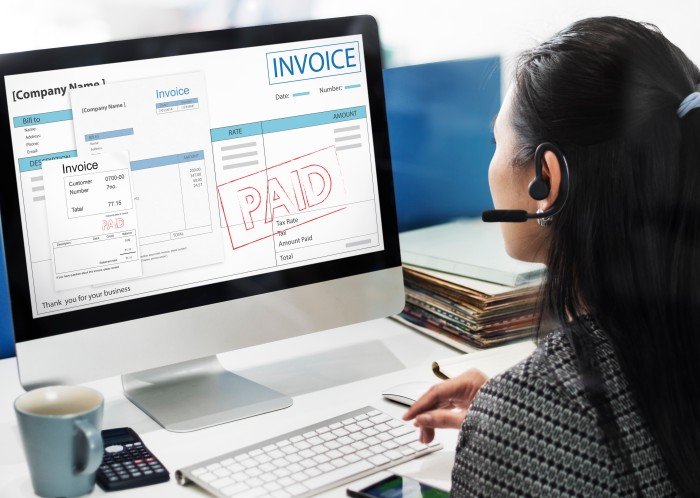
Invoices issued using a solution such as easyap contain the same information as any conventional invoice. That is, the information required under Article 6 of Royal Decree 1496/2003, which regulates invoicing in Spain:
- The details (name, business name, or corporate name) of both the issuing and receiving companies.
- The invoice number and series.
- The date of issue.
- The Tax Identification Number (TIN) of both companies.
- The tax domicile of the issuer and the recipient.
- The transactions that have been carried out, which must be described in approximate terms and on the basis of which the tax base is determined.
- The unit price of each share or transaction, excluding tax.
- The tax rate to be applied, as well as the tax liability.
In short, regardless of the type of invoice you want to issue, with software such as the one we have developed at easyap, you can use all kinds of documents for electronic invoicing for your business: ordinary, simplified, pro forma, summary, etc. But all of them digitized and compliant with electronic invoicing and the SII.
Other advantages of electronic invoicing for your accounting
So, when does the SII become mandatory? It will be required by law for all companies starting in 2025, which means you will have to adapt whether you like it or not. The scenario will be 100% digital, and anyone who wants to be part of it must undertake this digital transformation process. digital transformation.
However, at easyap we invite you to see this leap into the future as a step forward for your business and not as a measure you are forced to adopt. Governments and the many companies that already issue electronic invoices and use systems like ours have been able to see the numerous advantages they offer.
The benefits we highlight for your accounting and your business in general are as follows:
Optimization of time and equipment resources
With software like ours, the entire invoice workflow is streamlined and unified within the same system. This reduces processing times and allows you to invest equipment, personnel, and time in other areas of the business.
Traceability and greater transparency
The advantage most valued by administrations, because all transactions are recorded in one system, while at the same time allowing you to have greater control over everything related to taxes.
Improved communication
Suppliers can check the status of their invoices whenever they want, which means there are fewer communication barriers and the relationship with them improves significantly.
Much more efficient and organized file and document management
When everything is registered in the system, the files are stored there and offer much more convenient access, whether they are tax documents, invoices, or any other type of document.
Supporting sustainability
The reduction in paper use is considerable, so the environmental impact of electronic invoicing compared to conventional invoicing is significant.
With all the information provided in this article, what is clear above all is that businesses and electronic invoicing go hand in hand. And they do so not only because of business acumen, but also because of legal obligations. At easyap, we encourage you to do the same. Would you like us to accompany you in your digitization process?