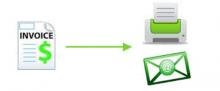
At easyap, we are seeing how the receipt of invoices by email is growing unstoppably month after month, with the vast majority of cases involving PDF documents. This situation is caused by the regulatory change that came into force on January 1, 2013 (Royal Decree 1619/2012), which regulates invoicing obligations and, in order to promote electronic invoicing , treats paper invoices as equivalent to electronic invoices. Among other things, this means that PDFs are now valid as a medium for invoices, provided that certain requirements are met.
According to the regulation, the obligations regarding storage and access for electronic invoices are the same as for paper invoices.
Receiving invoices by email: How should they be handled?
In summary, the regulation states that the obligation to preserve records must be fulfilled by any means that guarantees the authenticity, integrity, and legibility of the content, as well as prompt access by the Tax Administration.
Given these obligations, the question is: is email an appropriate tool for storing invoices received?
The answer is quite simple: No.
Email may be the appropriate medium for receiving invoices in PDF format, but it is not suitable for consultation or archiving. How can a request from the Tax Agency to search for a specific invoice in an email database be handled? The document received does not usually contain any reference to the invoice number, date, amount, issuer, or recipient in its identification. Searching for a specific invoice when the volume is low can be arduous work, but it can be successful. But what happens when there is a significant volume of invoices per year? And when the request received refers to documents that are, say, three years old?
Requirements for receiving invoices
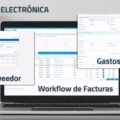
In order to comply with the requirements, it will be necessary to have document management tools that archive the image of the invoice together with certain data so that it can be searched for when the time comes. And as complementary tools that speed up the invoice processing cycle and are necessary for these obligations: OCR (to assist in the extraction of data, which will then be searchable) and workflows for the cycle and automatic accounting (which will allow online access and consultation).