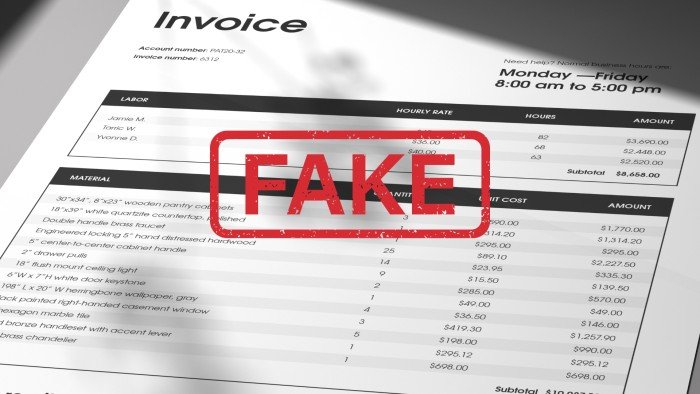
They say that the devil is in the details and this remains true in electronic invoicing False invoices are a reality. They refer to documents that don’t comply with the regulations of a region or country. These fraudulent documents are much more common than we think and knowing how to detect them is essential for avoiding problems and penalties. In this- article, we deal with the sensitive issue of false invoicing.
What are fake invoices?
By definition, we understand false invoices as accounting documents issued with the intention of deceiving tax authorities and obtaining illicit benefits. They can be generated to simulate taxes that were never paid or to inflate the value of a real transaction.
Thus, false invoices allow the company that issues them to deduct something it never paid or to collect undue refunds. As for their uses, they are normally used for the following purposes:
- Tax evasion
- Money laundering
- Financing of illegal activities
- Committing fraud against the relevant tax authorities
Is creating fake invoices illegal? As you will understand, falsifying invoices is a serious crime, regardless of the tax residence and the place where the issuing company operates. Although legislation varies from region to region, companies that issue false invoices can face civil and criminal penalties, as you will see below.
How can you spot them at first glance? Main differences from a legitimate one
If you think that false invoices are being issued, by your company, a supplier, or a customer, you should report it. This is the only way for tax authorities to implement necessary measures that prevent tax fraud. But how to tell if an invoice is fake?
Identifying a fake invoice is not easy. Or, at least, some of them are not. It is true that there are different types of invoices for which the information they must include is stipulated. However, there are real specialists in generating fake invoices. Even so, there are indicators that help detect them, such as:
- Contact details. Fake invoices often contain incomplete or incorrect contact information. Verify that the phone number or email address is real.
- Company details. Check whether the company issuing the invoice is legitimate by investigating whether it exists, whether it has a website, whether there is public information about it, etc.
- Tax identification numbers. Check whether the tax identification numbers of the issuer and recipient are correct and valid in the public records of the relevant tax authority.
- Transaction details. Ensure that the transaction details on the invoice are accurate and consistent, and that the prices and quantities are also correct.
Governments typically publicly offers the requirements that paper-based and electronic invoices must comply with .
What happens if I receive a fake invoice?
If none of the issues mentioned in the previous section apply to you, you may be dealing with a fake invoice. In that case, you should take the following steps:
- Verify the authenticity of the invoice. To dispel doubts and suspicions that an invoice is false, you must first verify the authenticity of the invoice on your own. To do this, - you can contact the issuer and confirm the details of the transaction.
- Documentit. If the invoice is indeed false, you must document everything related to it. That is, you must record the date of receipt, the company name and contact details of the issuer, the amounts involved and any other information that could be useful in an investigation.
- Inform the tax authorities. How to report fake invoices? Once you have confirmed that it is false, inform the tax authorities. They will investigate the matter and take the necessary measures to prevent or sanction fraud. In addition, you can avoid tax and administrative problems by reporting the incident.
- Take legal action. If the false invoice impacts your accounting or taxation, take whatever legal action you deem appropriate to claim compensation or to balance your billing.
When faced with a false invoice, it’s important to take immediate action. This is the best way to protect your company and avoid any negative consequences.
How does the tax office check invoices?
However, although we have so far discussed how you can detect it, the tax authorities are also responsible for prosecuting and combating false invoicing. We are referring to the AEAT (Tax Agency), provincial councils, and other tax authorities.
These institutions have their own procedures for reviewing the invoices of thousands of companies. Similarly, and as an example, the Spanish Treasury checks invoicing processes using the following tools:
- Verification of information on tax returns. The tax authorities verify the information on tax returns filed to check whether the invoices correspond to actual transactions.
- Analysis of financial information. The Tax Agency uses financial analysis techniques to identify suspicious patterns and behaviors that indicate the existence of fraudulent invoices or activities.
- Audits. The tax authorities carry out online and/or in-person audits of companies to verify the accuracy of their invoices.
- Exchange of information with agencies in other countries. This agency may also exchange information with tax agencies in other countries to identify illegal transactions.
These are legal and legitimate mechanisms that help the Treasury and regional tax authorities detect fraudulent documents.
Penalties for issuing false invoices
In turn, also to penalize invoice falsification, each country's legislation establishes its own penalties. In general, fraudulent invoicing is considered a serious crime and can lead to civil and criminal penalties, including financial penalties, imprisonment, confiscation of assets, and loss of business license.
In Spain, for example, issuing false invoices is considered a tax offense and is classified as such in the Penal Code. Penalties may vary depending on the severity of the offense. However, there are fines of up to 150% of the amount defrauded, prison sentences of up to 6 years, and the inability to qualify for public aid or tax benefits for a specified period of time.
In addition to criminal and administrative penalties, the issuance of false invoices can also have negative consequences on the company's reputation. This means it can damage the company's image in the eyes of customers, suppliers, and tax authorities.
How to validate an invoice?
In turn, validating an invoice is another useful mechanism for avoiding problems with erroneous or false invoicing. To do this, you must check that the invoice complies with all legal and tax requirements by reviewing the following elements:
- Identification of the sender and recipient, including their names and tax identification numbers.
- The details of the transaction, such as the date of issue, invoice number, description of goods or services, quantity, and price.
- Applicable taxes, such as the tax rate and the amount of the corresponding tax.
- The format, which must be that established by the tax authorities.
- The signature of the sender and/or receiver, as applicable.
Once you’ve checked these aspects, you can be assured of the invoice’s validity and proceed to management and storage. This is something you can easily do with automatic accounting software like easyap.
Why are electronic invoices more secure than paper invoices?
In addition, there is a new factor that helps combat false invoicing. We are talking about the digital world and the technologies it offers us. The easyap software is the best example, as it allows you to generate your electronic invoices in compliance with all legal requirements.
In fact, the electronic invoices are more secure than paper invoices. For this reason, they have already been made mandatory in many countries mandatory, including Spain. They also have several features that make them more reliable, such as:
- Authenticity. Electronic invoicing systems such as ours have authenticity mechanisms that ensure that the invoice has not been altered and comes from a legitimate issuer.
- Integrity. Online invoices cannot be altered without leaving a trace.
- Confidentiality. These types of invoices can be encrypted to protect confidential information about customers and suppliers.
- Registration. Electronic invoices are recorded and stored in secure systems, providing easy access to information and greater transparency.
- Reduction of errors. Electronic invoices reduce the possibility of human error, as the information is processed automatically.
In short, electronic invoices are more secure than paper invoices because they have more sophisticated security mechanisms. In addition, digitizing transactions offers greater efficiency in billing.
Our software guarantees all these benefits. Easyap also offers functionalities that go beyond invoicing. It offers handy features that aidtax communication,employee expenses space, supplier portal and more... If you want to know more, just contact us.
Frequently Asked Questions
How can you tell if an invoice is fake in Spain?
Unfortunately, there is no magic formula for checking for falsification in Spain, although that does not mean it is impossible. Checks must be carried out to find the flaw that reveals the falsification, such as missing data, numbering errors, exaggerated amounts, or the absence of supporting documents.