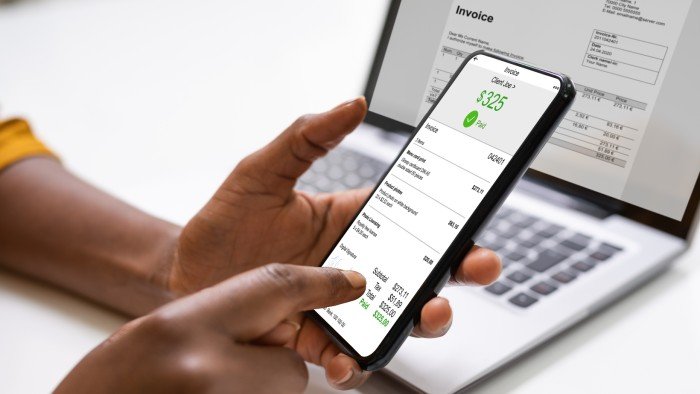
We usually talk about emissions, but today's topic is just as important: receipt of invoices. It is a key source of financial information and a fundamental process for any business in its relationship with its suppliers. Manual management is tedious and prone to errors, which can have negative consequences for your business relationships and your company's profitability. That is why, below, we break down what electronic invoice receipt is and reveal why you should automate it with software such as easyap.
What is electronic invoice reception?
Technically, the receiving electronic invoices is the process by which a company of any type receives and manages invoices in digital format, rather than on paper. It involves four steps:
- The reception itself receipt of the electronic invoice.
- The verification of its authenticity.
- The validation of the data contained therein.
- The accounting in the company's accounting system.
Unlike receiving paper invoices, receiving electronic invoices allows companies to automate the process. This saves time and reduces the likelihood of errors. It also lowers printing and paper costs, making it a more sustainable and cost-effective in the long term.
Therefore, receiving electronic invoices is a key and necessary process for any company seeking to improve efficiency and reduce costs associated with invoicing and accounting.
What are the obligations of the recipient of electronic invoices?
On the other hand, when you receive an invoice, whether digital or electronic, you must comply with certain requirements. In Spain, you will have several legal obligations that vary depending on whether you have to issue invoices online or not, according to the regulations.
1. Verify the authenticity of the invoice and the digital signature.
Firstly, if you are required to do so, you must ensure that the invoice received complies with legal requirements and is digitally signed. You must also verify the authenticity of the digital signature and the integrity of the invoice to prevent fraud or data manipulation.
2. Keep them for 5 years.
Secondly, all companies must keep electronic invoices received for a minimum period of five yearsfrom the end of the fiscal year to which they refer. This is essential for complying with tax and accounting obligations, as well as for any possible audits.
3. Record them in software that is accessible to you and your suppliers.
Finally, if you have opted to receiving electronic invoices voluntarily, make sure your software is compatible with the format used by your suppliers. Also, inform them of your address for receiving invoices and ensure that they are stored properly.
As you can see, the recipient is required to comply with certain legal requirements. These conditions guarantee the authenticity, integrity, and preservation of invoices received, whether voluntarily or mandatorily.
How do you acknowledge receipt of an electronic invoice?
In this regard, there is another very common question that many of our customers ask: how do you acknowledge receipt of an electronic invoice?
First of all, the acknowledgment of receipt of an electronic invoice is written confirmation that it has been received. In Spain, the acknowledgment of receipt of an electronic invoice can be done in several ways, depending on your preference.
By email
A common way is via an email message that is automatically sent to the supplier upon receipt of the invoice. This email can include detailed information, such as the invoice number, date, or total amount.
With accounting software
Another way is using a management tool that includes this functionality. Software such as easyap automatically generates the acknowledgment of receipt after receiving the electronic invoice. This makes the process easier and faster.
In any case, it is important that the acknowledgment of receipt is clear and detailed. This will ensure that it is correctly recorded and managed. You should also keep a copy as proof that you have received the invoice correctly.
What is the date of receipt of an invoice?
In turn, regarding the date of receipt of electronic invoices, it can be determined more accurately than in conventional invoices. Electronic invoices are automatically recorded in the system.
In Spain, the date of receipt of an electronic invoice is defined in Article 156.2 of the Regulation on invoicing obligations. According to this, the date of receipt of an electronic invoice will be the day on which the recipient has access to it.
Please note that the date of receipt is essential for calculating the invoice payment deadline, as established in the Spanish law against late payment. Therefore, it is vital to correctly record the date on which you receive each electronic invoice in order to comply with legal obligations and avoid penalties for non-payment.
Why should you use easyap for receiving invoices?
Now that we have clarified what invoice receipt is and what it entails legally, let's get to the heart of the matter: how easyap technology can help you with this accounting process and in your relationship with your suppliers.
Our solution stands out for being comprehensive and secure for receiving and managing your electronic invoices. With it, both you and your suppliers and partners will enjoy numerous advantages, such as the ten listed below.
1. Improving relationships with your suppliers
One of the main benefits of easyap is that it facilitates communication with your suppliers, primarily through the known as the supplier portal. In addition, thanks to the automatic issuance of acknowledgments of receipt and the quick and efficient resolution of incidents, your relationship will be more fluid and convenient.
2. Time savings
By automating the process significantly reduces the time you spend managing invoices. This allows your employees to focus on other tasks and areas, and your suppliers, with independent and full access, can also devote as much time as they want without your intervention.
3. Reduction of human error
Our platform eliminates the need to manually enter invoice information. Therefore, data entry errors are reduced and, consequently, the business's accounting information is much more accurate.
4. Enhanced security and privacy
The easyap solution uses encryption and secure storage technology. With it, you guarantees the security and confidentiality of the invoices received and the information they contain. This reduces the risk of fraud and ensures the privacy of both your company's and your suppliers' data.
5. Integration with other accounting systems
The easyap software integrates with different accounting systems and ERPs. This makes it easy to group different formats and types of invoices is much simpler, as is their management in the payment process. In addition, in your case , you will have a general entry point for electronic invoices.
6. Compliance with applicable regulations
At easyap, we adhere to the current legislation in each region. Therefore, our solution complies with all legal regulations regarding electronic invoicing. Consequently, the risk of penalties and fines is much lower.
7. Savings in material and storage costs
Our platform reduces the costs of storing and archiving invoices, as well as those associated with manual management . It is also more economical, as it reduces paper usage and printing costs.
8. Greater accessibility
The easyap solution allows you and your suppliers to access electronic invoices from any device and location with an internet connection. This means that everyone benefits from improved accessibility and easier issuance and receipt of invoices.
9. Workflow management
The easyap solution is highly efficient throughout the entire process of managing customized workflows and what we call invoice workflow. This makes it easier for those responsible for each area to approve invoices.
10. Invoice tracking
Finally, the easyap system allows you or your teams to track all invoices received and their status in real time. It also makes it easier for you to manage your business's cash flow and improves the visibility of accounts payable.
In short, easyap is a solution that stands out for being the most comprehensive and secure for both you and your suppliers. It is perfect for managing and, in particular, receiving electronic invoices.
As you have seen, these and other advantages are fully applicable to all types of companies and markets. We are talking about saving time and money, reducing errors, confidentiality and security of information, integration with accounting systems, and regulatory compliance. Want to know more?