Both concepts are new. Both are also Anglicisms that are becoming increasingly familiar to us due to their growing popularity. And both are mainly associated with the automotive sector, although they are also beginning to be used in other industries and markets. We are talking about leasing and renting. What do they actually consist of? Why are they becoming a financial solution for businesses and individuals? And, above all, what are the differences between leasing and renting? Let's answer all your questions and uncertainties in this article.
Leasing and renting: defining both concepts
Let's start with the basics: defining each of the concepts. Leasing and renting are two terms that often go hand in hand and are mainly linked to the vehicle rental and use sector, both by individuals and companies. The fact is that, due to their interesting characteristics, they are now also being introduced in other sectors.
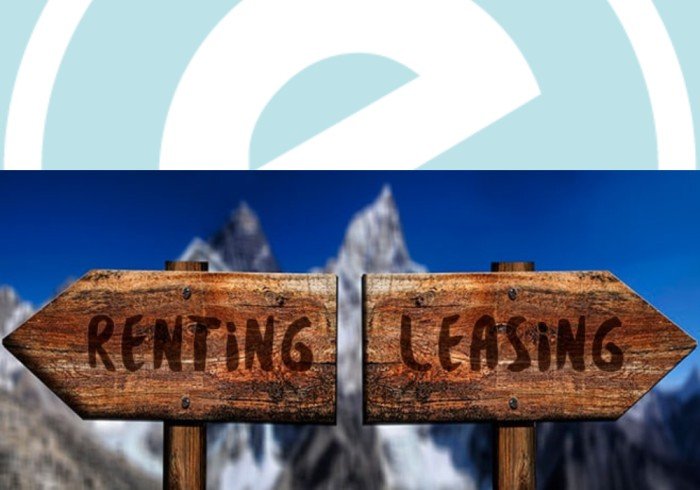
However, as we indicated in the previous paragraph, renting and leasing are not the same thing. On the one hand, renting (from the verb "to rent" in English) is precisely a rental in which the lessee enjoys the use of an asset for an agreed period of time, without having the right to acquire it at the end of that period. Leasing, on the other hand, is a rental of an asset that offers the lessee the possibility of keeping the asset at the end of the agreed term.
In other words, leasing and renting are two financial models for leasing goods. However, the main difference between leasing and renting is that leasing offers a right to purchase at the end of the contract, while renting does not. We should also point out that, in both financial models, the goods being marketed are new and that both have found in the vehicle sector a real ecosystem in which to grow and gain popularity.
Benefits of renting and leasing
"Pay a monthly fee of x euros and enjoy the new x brand model for the next x years." This is the increasingly common advertising message from the vast majority of car brands. At the same time, if we stop to read the fine print of these ads, we see that they include higher prices in the final installment. The reason is that these are leases, in which, at the end of the term, the option to keep the car is offered by paying that final installment.
Televisions, billboards, website banners, radio commercials... We can find examples of this everywhere. Both leasing and renting, especially the latter when it comes to companies, have become a very attractive financial model for brands and lessees. Why? Because they offer benefits and advantages such as these:
- Short terms. Rental or leasing contracts do not usually go much beyond 5 years and, at a minimum, last a total of 2 years.
- They do not require very high initial investments. You only pay monthly installments, as if it were a monthly service payment.
- Different possibilities upon termination of the contract. It is common to find leases in which the brand (especially in the automotive world) at the end of the rent offers:
- Retain ownership of the property by paying the remaining amount.
- Return it at the end of the agreement.
- Replace it with a newer, more up-to-date model, paying for this change, of course.
- It offers tax advantages, as expenses can be deducted from the taxes we owe to the tax authorities.
In turn, another advantage that these models generally offer is that the monthly payments, whether for individuals or companies, tend to include associated costs such as registration, taxes, insurance, and maintenance. As you know, these expenses are not always taken into account when calculating the cost of purchasing a vehicle and, in the long run, they end up inflating the price significantly.
Which is better: leasing, renting, or buying outright?
Now we come to the difficult question of what the best solution is. Is a financing model like this better for me, or should I purchase the property outright? And another question: which is better, leasing or renting? It depends.
In the case of companies, despite the fact that remote working is becoming increasingly popular, there are still many companies that have to allocate large budgets to areas such as transportation. For these companies, saving costs in these areas is essential, and leasing or renting are perfect for this. They allow you to enjoy up-to-date, modern vehicles as if they were your own, with a much lower initial outlay than you would incur when purchasing a car, motorcycle, or van.
In fact, along these lines, if you have to decide between renting or leasing as a company, renting may even be a more attractive option. Since there is no option to purchase at the end of the contract, many companies start a new rental contract with the same or another brand. And what are the advantages of this?
- Having a modern and up-to-date fleet of vehicles in terms of functionality and technology.
- Show a fresh, modern, and up-to-date brand image to the company that uses these recent models.
- Presenting yourself in an attractive way to your own employees and future applicants for positions within the organization.
On the other hand, workers are spending less and less time in their jobs, so the fact that rental and leasing terms are around five years is more in line with the temporary nature of the relationship between company and worker. Finally, the financial control that monthly payments allow means that for many financial managers much easier to keep track of the accounts.
Even so, leasing, which was originally designed for the self-employed and small businesses, can also be attractive today for all types of companies. Of course, this offers the worker the possibility of keeping the vehicle at the end of the agreement, with the worker bearing the final costs of the purchase. It should also be noted that, as with all rental models, not all leases are eligible for certain tax advantages mentioned above.
Ideal models for controlling employee expenses
It is true that, at the individual level, the culture of owning property is losing ground in favor of services and reusable and/or immediate-consumption products. The best example of this is the success of streaming platforms. streaming, food delivery apps, apps for buying and selling second-hand items, and so on. Even so, when it comes to high-cost products (cars or houses, for example), many people still prefer to buy outright and own the asset.
easyap value proposition
- Issuing and receiving invoices to customers and suppliers.
- Adapted data model: license plate number, chassis number, driver, etc.
- Vehicle association on each invoice.
- Fleet vehicle statuses
- Comparison of relevant documentation with invoices (orders, contracts, etc.)
So, the answer to whether it is better to buy outright or rent or lease depends on each individual and their lifestyle and consumption habits. What we at easyap would like to point out is that these financing models are a great help to certain companies. Companies, for example, where there are many business expenses related to transportation. Paying these in monthly installments allows financial managers to better account for all employee expenses. And if these managers use optimized services designed for this purpose, such as easyap, everything will be even simpler, faster, and more secure.