You don't need to be a financial expert or work in an accounting department to have heard of the two concepts in this article: invoices and delivery notes. You've probably heard of these concepts, either as recipients or issuers of them. However, it's common to find people who confuse them. That's why we ask the following question: do you know the difference between an invoice and a delivery note? And, furthermore, do you know how they are managed today, where digital transformation has changed everything? All that and much more is what you will see in the following lines.
What is the difference between an invoice and a delivery note?
Let's start with the basics. That is, clearly establishing that invoices and delivery notes are not the same thing. This is true both now that they are issued online and in the past, when both were done with pen and paper. Therefore, before comparing and contrasting them, let's first define what an invoice is and what a delivery note is.
What is an invoice?
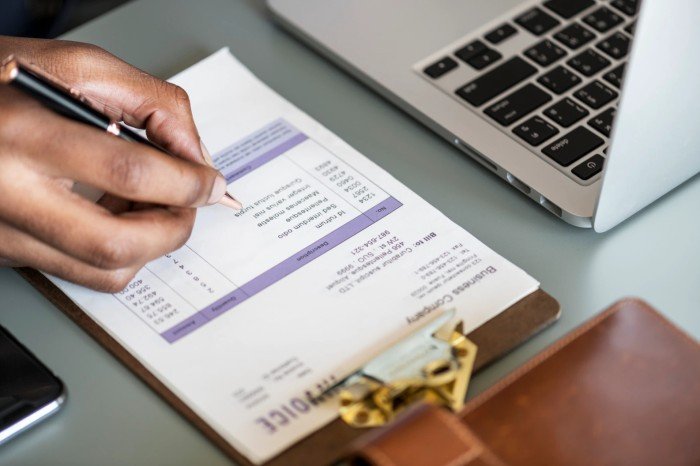
On the one hand, an invoice is a account detailing the purchase of a product or service for a price. It also specifies the date of the transaction, as well as the tax information of the parties involved in it. In turn, this invoice must be issued by the seller and delivered to the buyer so that the latter can pay it as agreed.
What is a delivery note?
A delivery note is a document given to the buyer or, failing that, to the person who receives a good or service. That recipient, in turn, must sign the delivery note to certify that they have received it. For this reason, it is also commonly referred to as a delivery note. In fact, it has accounting functions, but not tax functions.
At this point, once we have defined what an invoice is and what a delivery note is, we can intuitively understand the main feature that distinguishes these documents. The main difference between an invoice and a delivery note is that the invoice must justify payment for the transaction, while the delivery note does not. The delivery note only justifies the receipt of the product or service, not that it has been paid for.
The components of a delivery note or packing slip
Due to its characteristics, the delivery note will become an invoice when it is collected by the seller. Furthermore, the company issuing the delivery note can issue several and compile them all into a single invoice. This is a widely used resource when it comes to commercial transactions in which the product or service consists of several different deliveries.
And what information exactly does it have to contain? Specifically, the components that must be included on a delivery note are:
- The serial number and date of issue.
- The buyer's tax details (name or company name, address, and tax ID number).
- The seller's details, which will be the same as the information you include for the buyer.
- The products that are shipped.
As we pointed out when giving the definition, a delivery note records the receipt of goods. Therefore, is it mandatory for the recipient to sign this note.
In turn, a delivery note may contain additional information. For example, the place of delivery of the goods, contact details, or the agreed price. However, this information is not mandatory, although it is useful for the accounting records of both the sender and the recipient.
Are there different components in an invoice than in a delivery note?
The price and tax validity are the main differences between invoices and delivery notes. For this reason, there are invoicing regulations that establish which components must be included in invoice summaries, which are:
- The number and date of the sequential invoice.
- The fiscal data of the issuer , which are the name, address, and TIN or CIF.
- The tax details of the recipient, as well as those of the sender.
- A description of the concept of the operation.
- The tax base for taxes and withholdings that may apply.
- The VAT rate and the tax amount.
- The total price of the transaction.
As with delivery notes, there are other components you can add to your invoices. These will be useful for providing more accurate information for your accounting, although they are not required by law. We are referring, for example, to the form and terms of payment, as well as any discounts that may apply or other comments.
The fact is that the difference between delivery notes and invoices is also reflected in the components that must be included in each of these documents. Invoices must include information relating to the price and taxation of the product or service sold.
Is it mandatory to keep delivery notes?
Finally, regarding the differences between delivery notes and invoices, many people wonder whether it is also mandatory by law to keep these delivery notes. The answer, technically, is no. However, invoices must be kept for a period of four years, according to the General Tax Law, there is no regulation in force that requires delivery notes to be kept.
However, it is possible that, in order to prove a specific sale and the specific characteristics of the product or service, the invoice does not include this information, but the delivery note does. In this case, the delivery note may be the best way to prove and validate a transaction.
In any case, the delivery note or notes, if there are several, must be attached to the invoice in question. For all these reasons, we recommend that you keep the summaries of your delivery notes and the information they contain.
The role of easyap and technology in storing delivery notes and invoices
This is where easyap can be your great ally. Why? For the simple reason that you no longer need physical shelves and filing cabinets to store your invoices and delivery notes. Technology allows you to:
- Save money on equipment and materials (sorters, ink, printers, etc.).
- Optimize physical space, since you don't need shelves and real bookcases to store delivery notes and invoices.
- Be more sustainable and respectful of the planet, since using less paper the environmental impact is reduced.
An online invoicing software like ours allows you to control and store all your invoicing and accounting in a digital format. In addition, the system we have developed is suitable for all types of companies and markets, regardless of billing volume. You pay per invoice issued and not a fixed cost that, depending on the case, could be disproportionate.
Not only that, but our software offers you much more than just storage and invoice management and delivery notes. With it, you can also issue and receive electronic invoices. Your suppliers and customers can even check the status of their invoices whenever they want, all in one place in the cloud.
We could continue listing other advantages of using a solution such as easyap for your electronic invoicing: a portal for reporting taxes, a space for including employee expenses... But that would make this article too long. So if you want more, stay up to date with what we publish on our blog. Or better yet: contact us and we'll reveal everything step by step.